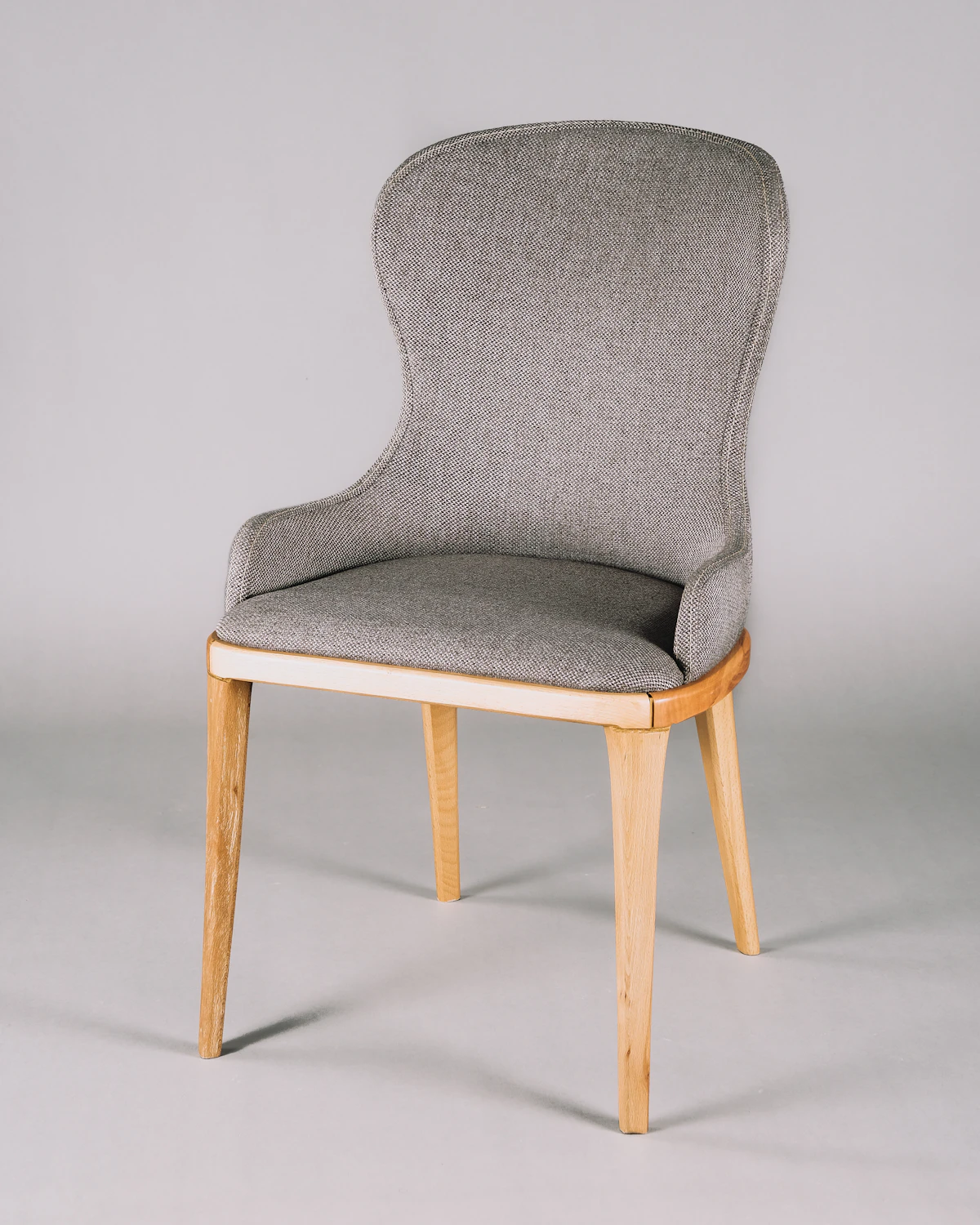
The finish is the only part of a piece of furniture your hand ever meets. It decides how the timber looks, how it feels, how it ages and — the part almost nobody considers at purchase — whether a mark made in year seven can be dealt with in twenty minutes or requires the piece to go back to a workshop.
There are only two families, and the distinction between them explains everything else.
Penetrating versus film: the whole argument in one paragraph
A penetrating finish — oil, hardwax oil, wax — soaks into the timber and cures inside it. There is no layer sitting on top, so you feel wood. Damage is local: you clean the spot, apply more oil, blend, done.
A film finish — lacquer, polyurethane, varnish, French polish — cures as a layer on the surface. It protects better against liquids and abrasion because there is a barrier. But damage breaches the barrier, and repairing a film means either an invisible patch (difficult) or refinishing the whole surface (expensive).
Neither is superior. They are different bargains: repairability against imperviousness.
| Finish | Feel | Protection | Repair | Upkeep |
|---|---|---|---|---|
| Hardwax oil | Bare timber, matt | Good against water, poor against heat | Spot-repairable at home | Re-oil every 1–3 years |
| Pure oil (danish, tung) | Very natural, low sheen | Modest | Easy | Every 6–12 months |
| Wax over oil | Silky, warm | Low | Very easy | Every 3–6 months |
| French polish (shellac) | Deep, luminous | Poor against water and alcohol | Repairable by a specialist | Occasional revival |
| Nitrocellulose lacquer | Warm film, any sheen | Good | Burnishable and re-sprayable | Low |
| Pre-cat / conversion varnish | Hard film | Very good | Difficult | Very low |
| Polyurethane | Plastic film | Excellent | Strip and redo only | None until it fails |
What I specify, and why
For most furniture that lives in a house and gets used: hardwax oil. The reasoning is not aesthetic, though I prefer how it looks. It is that in ten years’ time, a ring, a scratch or a scuff can be dealt with by the owner in an afternoon with a cloth and a tin, and the piece looks correct again.
The alternative — a polyurethane table that has been scratched — offers no such option. It cannot be spot-repaired, because the new material will not blend into the cured film. It has to be sanded back to bare wood and resprayed, which means a workshop, a week, and a bill.
Where I do specify film finishes: kitchen and bathroom joinery, anything that will meet standing water, children’s furniture, and pieces where the design depends on a mirror-flat lacquered surface — a black lacquer Deco cabinet is a film finish by definition, and rightly so.

How to tell them apart in a showroom
- Look along the surface at a shallow angle towards a window. A film finish shows an even sheen and often a faint orange-peel ripple. An oiled surface shows the grain’s own texture
- Feel it with the back of a fingernail. Oil feels like timber; a film feels slightly slick and slightly cool
- Look at an inside corner or where two surfaces meet. A film finish pools slightly in corners and can show a build-up line. Oil cannot pool
- Ask what the sheen level is. A workshop using film finishes will quote a number — 10%, 25%, gloss. A workshop using oil will say matt, because oil has one sheen
- Ask what happens if it is scratched. The answer tells you both the finish and how much the maker has thought about the next ten years
What each one does in Lahore specifically
Two local conditions matter: heat, and the humidity swing.
Heat attacks film finishes at the edges. A polyurethane top in a room that reaches 40°C in June expands at a different rate from the timber beneath it, and after a few cycles the film lifts at a corner or an edge — usually the one nearest a window. Once lifted it is a strip-and-redo job.
Humidity attacks curing rather than the cured film. Nitrocellulose lacquer sprayed at 70% relative humidity can blush — a milky haze trapped in the film as moisture condenses during the flash-off. A workshop that sprays through monsoon without a controlled room is producing work that will show this, and it is the reason good workshops quote longer lead times in July and August. More on that seasonal effect in monsoon humidity and wood movement.
Oil is largely indifferent to both. It cures slower in humidity and that is the whole of the problem.
Sheen — the choice that dates a piece fastest
Gloss reads as 1990s in this market, and it shows every imperfection in the substrate and every fingerprint in use. It also shows dust, which in Lahore is a daily consideration rather than a theoretical one.
A matt or low-sheen finish — 5–15% — reads as contemporary, hides dust between cleans, and lets the timber rather than the coating be the subject. For Deco pieces specifically, the period used a soft satin on timber and a true gloss only on lacquered work, which is a useful rule: gloss on black lacquer, matt on wood.

Repairing what you already have
Most marks people live with are fixable.
- White ring on an oiled surface — usually moisture in the finish. Fine steel wool with a little oil, working with the grain, then re-oil the panel
- White ring on a film finish — try a hot iron over a dry cloth for two seconds at a time; it drives the moisture out surprisingly often
- Shallow scratch in oil — clean, re-oil the whole panel rather than the scratch, buff back after 20 minutes
- Scratch through a film finish — a wax filler stick in a matching colour is the realistic domestic answer. A proper repair means refinishing the panel
- Dents in solid timber — a damp cloth and a warm iron will steam most of them back up before any finish is applied
- Sun-faded panel — this is not a finish problem and cannot be polished out. It needs sanding back and refinishing, which is only possible on solid timber or thick veneer
Maintenance schedules that actually get followed
A schedule nobody keeps is worse than no schedule, so this is the minimum version.
- Oiled dining table: re-oil once a year, more if it is used hard. Takes about 40 minutes for a large table
- Oiled case pieces: every two to three years, or when water stops beading
- Waxed surfaces: every six months, and buff rather than build up
- Film finishes: nothing at all until they fail, then a professional refinish
- Everything: dust with a barely damp microfibre cloth rather than a dry one. A dry cloth carrying Lahore grit is a fine abrasive
- Never use silicone-based furniture sprays. They make refinishing extremely difficult later and every finisher in the world will curse you
Buy the finish you can repair yourself. The alternative is a workshop visit for every mark a family makes.
What each finish adds to the price of a commission, and where finishing sits in the overall cost, is set out in custom furniture in Lahore.